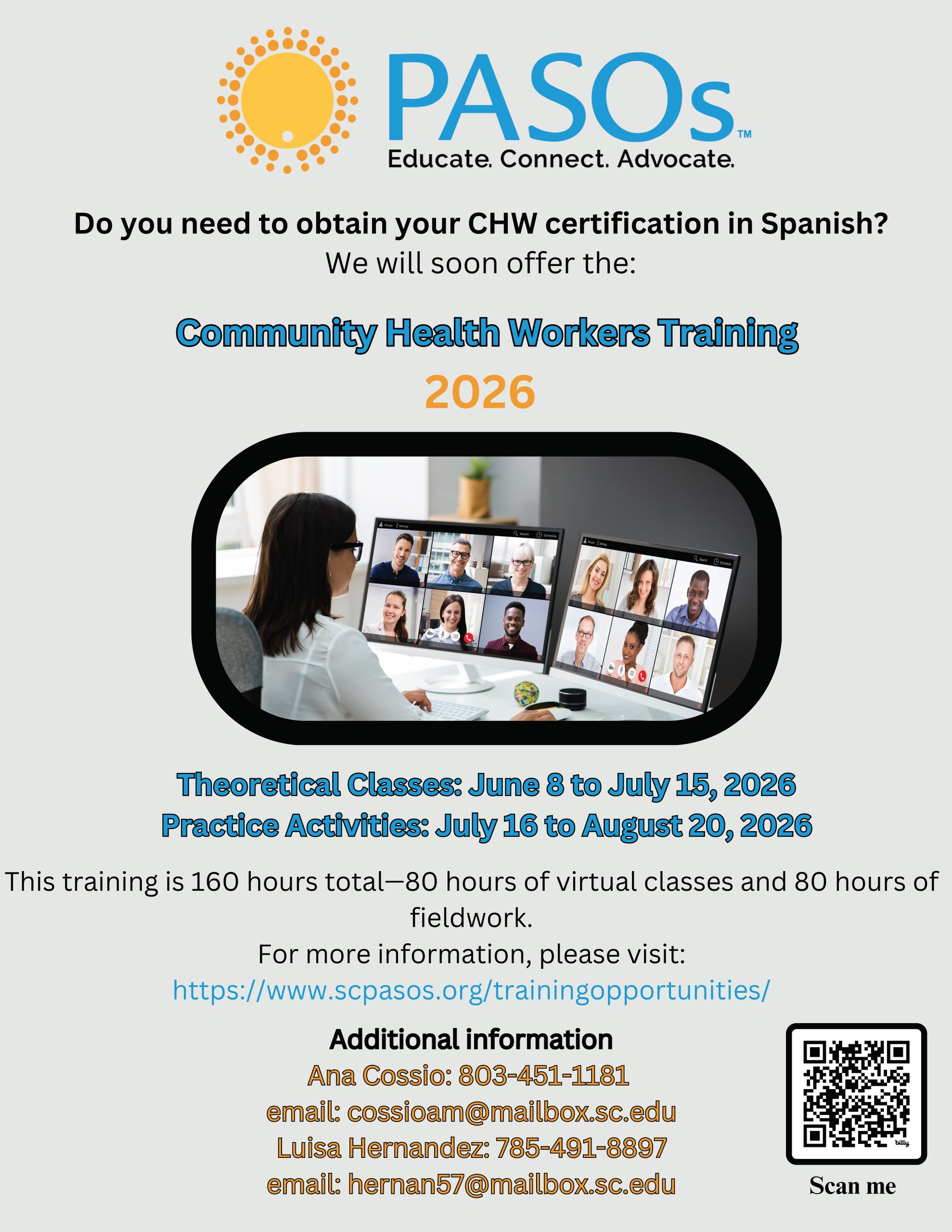

PASOs Training for CHW Certification:
The PASOs’ curriculum has been based off the national level C3 Core Competencies’ recommendations which are related to the central roles of CHW’s and the skills and qualities that have been collectively defined as essential competencies. Additionally, this curriculum meets the localized standards put forth by the South Carolina Community Health Worker Association’s Core Competencies to meet the requirements of the credentialing council to be deemed certifiable. The training is all in Spanish and it has been designed with 80 hours of virtual/classroom-based training and 80 hours of practicum in-the-field training activities. This unique combination of lectured learning and training will develop the skills needed by CHWs and allow them to respond in effective ways to the needs of Latino individuals and families, reduce disparities in their health, and advocate for changes in the health care system.
To facilitate learning in each of the sessions included in the curriculum, various educational techniques will be used such as small group work, individual case analysis, role playing, game dynamics, brain storming, discussions, visuals such as boards, charts, PowerPoint presentations, cards, personal written reflections, and investigation activities. The experiences and awareness of each CHW, situations they observed in the community or previous work experiences will contribute to the enrichment of the sessions and will provide a basis of understanding and legitimizing the CHW’s knowledge base. The practicum portion will guarantee the application of topics acquired during the theoretical training through working in duos or small groups to conduct individual interventions in agencies or health centers, facilitating health educational workshops, organizing, and carrying out health events, home visits, and developing a community mapping.
For more information on this course please contact Ana Cossio at cossioam@mailbox.sc.edu . For information on future trainings, please contact Ana Cossio at 803-451-1181 or Luisa Hernandez at 803-605-4685.